Turnkey PCB Assembly: The Complete Solution for Hassle-Free Electronics Manufacturing
When businesses and developers decide to manufacture a new electronic product, one of the first decisions they face is how to manage the production process. Do they source components themselves, coordinate with multiple vendors, and oversee every step of manufacturing? Or do they hand the entire process to a single, capable partner and focus on what they do best — designing and selling great products? If the second option sounds more appealing, then turnkey PCB assembly is exactly what they’re looking for.
In this article, we’ll explain what turnkey PCB assembly is, how it works, what its key advantages are, how it compares to other assembly models, and what to look for when choosing a turnkey PCB assembly partner.
What Is Turnkey PCB Assembly?
The term “turnkey” comes from the idea of simply turning a key to start something — implying that everything is already set up and ready to go. In the context of electronics manufacturing, turnkey PCB assembly is a service model where a single manufacturer handles the entire PCB production process from start to finish.
This means the turnkey provider takes responsibility for:
- Sourcing and procuring all electronic components
- Fabricating the bare printed circuit board
- Assembling the board by placing and soldering all components
- Inspecting and testing the finished assemblies
- Delivering completed, ready-to-use boards to the customer
In a turnkey arrangement, the customer provides the design files — Gerber files for board fabrication, a Bill of Materials (BOM), and pick-and-place files — and the manufacturer handles everything else. The customer receives finished, tested circuit boards without having to manage component purchasing, logistics, or manufacturing processes themselves.
This is in contrast to a consignment assembly model, where the customer supplies their own components and the manufacturer provides only the assembly service, or a partial turnkey model, where the customer supplies some components and the manufacturer sources the rest.
Two Types of Turnkey PCB Assembly
Within the turnkey model, there are two common variations worth understanding:
Full Turnkey PCB Assembly In full turnkey assembly, the manufacturer handles absolutely everything — component sourcing, board fabrication, assembly, testing, and delivery. The customer’s only input is providing the design files and specifications. This is the most hands-off option and is ideal for customers who want to minimize their involvement in the manufacturing process.
Partial Turnkey PCB Assembly In partial turnkey assembly, the customer supplies some components — typically specialty parts, proprietary components, or items they’ve already purchased — while the manufacturer sources the remaining components and handles all fabrication and assembly. This hybrid approach offers a balance between the convenience of full turnkey and the component control of consignment assembly.
How Does Turnkey PCB Assembly Work?
The turnkey PCB assembly process is comprehensive and well-coordinated. Here’s a step-by-step look at how it typically unfolds:
Step 1: Design File Submission and Review The customer submits their design files — Gerber files, BOM, pick-and-place files, and any additional assembly drawings or specifications. The turnkey provider reviews these files thoroughly, conducting a Design for Manufacturability (DFM) check to identify any potential issues before production begins. This review is one of the most valuable aspects of working with a turnkey partner — catching design problems early saves significant time and cost.
Step 2: Quotation and Order Confirmation Based on the design files and BOM, the turnkey provider prepares a comprehensive quote covering component costs, fabrication costs, assembly costs, testing, and lead time. Once the customer approves the quote and places an order, production planning begins.
Step 3: Component Sourcing and Procurement The turnkey provider uses its purchasing power and supplier relationships to source all required components. This is one of the areas where a good turnkey partner adds significant value — experienced manufacturers have established relationships with component distributors, can often secure better pricing than individual buyers, and have the expertise to identify suitable alternatives when components are out of stock or have long lead times.
Components are carefully inspected upon receipt to verify authenticity and compliance with specifications. Reputable turnkey providers source exclusively from authorized distributors to minimize the risk of counterfeit components.
Step 4: PCB Fabrication While components are being sourced, the bare PCB is fabricated according to the customer’s Gerber files. The fabrication process produces the physical board with all its copper traces, drilled holes, surface finishes, solder mask, and silkscreen markings. For customers using an integrated turnkey provider, fabrication and component sourcing happen in parallel, minimizing overall lead time.
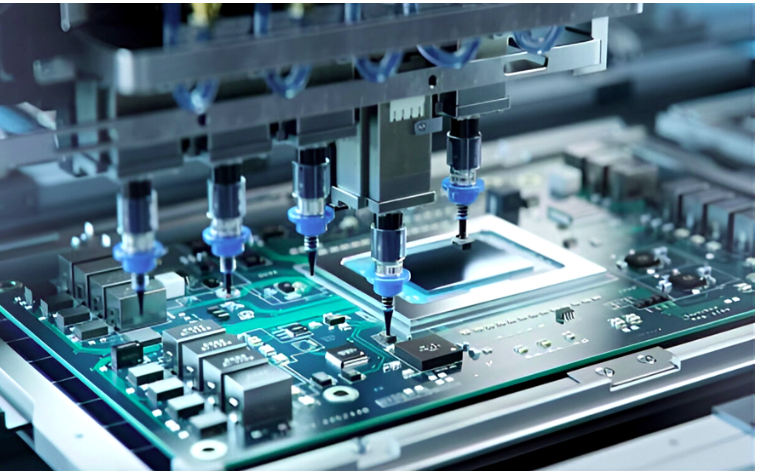
Step 5: SMT Assembly With the bare boards and components ready, assembly begins. Solder paste is applied to the board using a precision stencil printer, components are placed by automated pick-and-place machines, and the board passes through a reflow oven to create permanent solder joints. For boards with through-hole components, wave soldering or selective soldering is used after the SMT process is complete.
Step 6: Inspection After soldering, every board undergoes inspection to verify assembly quality. Automated Optical Inspection (AOI) checks for missing components, misalignment, solder bridges, and insufficient solder. X-ray inspection examines hidden solder joints on BGA and other bottom-terminated components. Any boards with defects are flagged for rework.
Step 7: Testing Testing confirms that the assembled boards function correctly. Depending on the customer’s requirements, this may include in-circuit testing (ICT), functional testing, burn-in testing, or other specialized tests. A good turnkey partner works with the customer to develop an appropriate testing strategy that provides confidence in product quality without unnecessarily adding cost or time.
Step 8: Packaging and Delivery Finished boards are packaged according to the customer’s specifications — whether that means anti-static bags, custom trays, or specific labeling requirements — and shipped to the customer’s location. Some turnkey providers also offer value-added services such as box build assembly, programming, and direct shipment to end customers.
Key Advantages of Turnkey PCB Assembly
Turnkey PCB assembly offers a compelling range of benefits that make it the preferred choice for many businesses:
Simplicity and Convenience The most obvious benefit of turnkey assembly is simplicity. Instead of coordinating with multiple vendors — a board fabricator, component distributors, an assembly house, and a testing service — the customer works with a single point of contact. This dramatically simplifies project management and reduces the administrative burden on the customer’s team.
Faster Time to Market A turnkey provider coordinates all aspects of production internally, eliminating the delays that can occur when multiple vendors hand off work to each other. Integrated sourcing, fabrication, and assembly under one roof means faster overall lead times and a quicker path from design to finished product.
Cost Efficiency Turnkey providers leverage their purchasing volume to negotiate better component prices than most individual buyers could achieve on their own. They also reduce the hidden costs of managing multiple vendor relationships — time spent on purchasing, logistics coordination, incoming inspection, and supplier communication all adds up quickly.
Reduced Risk With a single partner responsible for the entire process, accountability is clear. If a problem occurs — whether it’s a component quality issue, a fabrication defect, or an assembly error — the turnkey provider is responsible for identifying and resolving it. This simplifies problem resolution and reduces the customer’s exposure to supply chain risks.
Access to Expertise A reputable turnkey provider brings deep expertise across the entire PCB production process. Customers benefit from DFM reviews, component engineering support, process optimization recommendations, and quality management capabilities that would be difficult and expensive to develop in-house.
Scalability Turnkey providers are typically equipped to handle everything from prototype quantities to high-volume production runs. This means customers can start with a small prototype order, validate their design, and scale up to full production with the same partner — avoiding the disruption and risk of switching manufacturers as volumes grow.
Turnkey vs. Consignment PCB Assembly: Which Is Right for You?
Choosing between turnkey and consignment assembly depends on your specific circumstances:
Choose turnkey if:
- You want a simple, hands-off manufacturing experience
- You don’t have existing component inventory or preferred supplier relationships
- Speed to market is a top priority
- You’re producing a new design with no legacy supply chain in place
- You want a single point of accountability for the entire production process
Choose consignment if:
- You have existing component inventory you want to use
- You have proprietary or specialty components that only you can source
- You have negotiated pricing with specific distributors that you want to leverage
- You want maximum control over component quality and sourcing
Many experienced buyers use a partial turnkey approach — supplying their most critical or hard-to-source components while letting the manufacturer handle the rest — to get the benefits of both models.
What to Look for in a Turnkey PCB Assembly Partner
Not all turnkey providers are equal. Here’s what to evaluate when selecting a partner:
Integrated Capabilities: Look for a provider with in-house fabrication, assembly, and testing capabilities. Providers who outsource fabrication or testing introduce additional variables and potential delays.
Component Sourcing Network: A strong relationship with authorized distributors is essential for securing genuine components at competitive prices.
Quality Certifications: ISO 9001, IPC-A-610, and RoHS compliance are baseline expectations. Industry-specific certifications (ISO 13485 for medical, AS9100 for aerospace) are important for specialized applications.
Communication and Transparency: A reliable turnkey partner provides regular updates, proactively flags any issues, and is easy to reach when you need answers.
Engineering Support: The ability to offer DFM feedback, component alternatives, and process recommendations adds significant value beyond basic assembly services.
Conclusion
Turnkey PCB assembly is the most comprehensive and convenient approach to electronics manufacturing available today. By placing the entire production process — from component sourcing and board fabrication to assembly, testing, and delivery — in the hands of a single trusted partner, businesses can simplify their operations, accelerate time to market, and focus their energy on design and innovation rather than manufacturing logistics. For companies seeking a reliable, high-quality, and cost-effective manufacturing solution, China turnkey PCB assembly providers offer a powerful combination of advanced manufacturing infrastructure, deep technical expertise, extensive component sourcing networks, and the production scale to support projects of any size — from first prototype to full mass production.