What Features Matter Most in a Vacuum Pool Cleaner for Beginners?
Walking into the world of pool ownership should feel exciting, but for many beginners, the moment they start researching vacuum pool cleaners, excitement quickly turns into confusion. Dozens of models, competing specifications, and marketing jargon make it feel like you need an engineering degree just to keep your pool clean. Suction power ratings, navigation algorithms, filtration micron levels—the sheer volume of information can paralyze even the most enthusiastic new pool owner into inaction.
Here’s the truth that experienced pool owners eventually learn: the best vacuum pool cleaner for you isn’t the one packed with the most features or carrying the highest price tag. It’s the one equipped with the *right* features that match your specific pool, your lifestyle, and your comfort level with maintenance. A cleaner that works brilliantly for a seasoned owner with an Olympic-sized concrete pool might be completely wrong for someone with a modest vinyl-lined backyard retreat.
This guide strips away the noise and zeroes in on the essential features that genuinely matter for beginners. We’ll explore what drives effective cleaning performance, help you understand the different cleaner types, show you how to match a model to your pool’s unique characteristics, and frame your decision around long-term value rather than impulse purchases. By the end, you’ll have a clear framework to make a confident, informed choice.
1. Foundational Features: The Non-Negotiable Pool Cleaner Features for Effective Cleaning
Before diving into brands or price comparisons, every beginner needs to understand the three pillars that separate a genuinely effective vacuum pool cleaner from one that will frustrate you within weeks. These foundational features determine whether your pool actually gets clean, stays clean, and whether you’ll consistently use the cleaner rather than letting it collect dust in the garage.
Cleaning Performance & Filtration: The Heart of the Matter
A vacuum pool cleaner’s effectiveness comes down to two complementary actions: lifting debris off surfaces and trapping it permanently. Suction power handles the lifting, but without adequate scrubbing brushes, algae and stuck-on grime remain untouched. Look for models with active scrubbing brushes—rubber brushes work best on textured concrete surfaces, while foam or PVA brushes are gentler on vinyl and fiberglass. On the filtration side, fine filter cartridges capable of capturing particles down to two microns outperform standard mesh bags significantly. They trap pollen, fine silt, and even some bacteria that would otherwise pass through and recirculate into your water. Top-loading filter access is a detail beginners often overlook until they’re wrestling with a bottom-access design poolside—being able to pop out a cartridge from the top without flipping the unit over makes routine cleaning far more likely to actually happen.
Navigation and Coverage: Getting to Every Corner
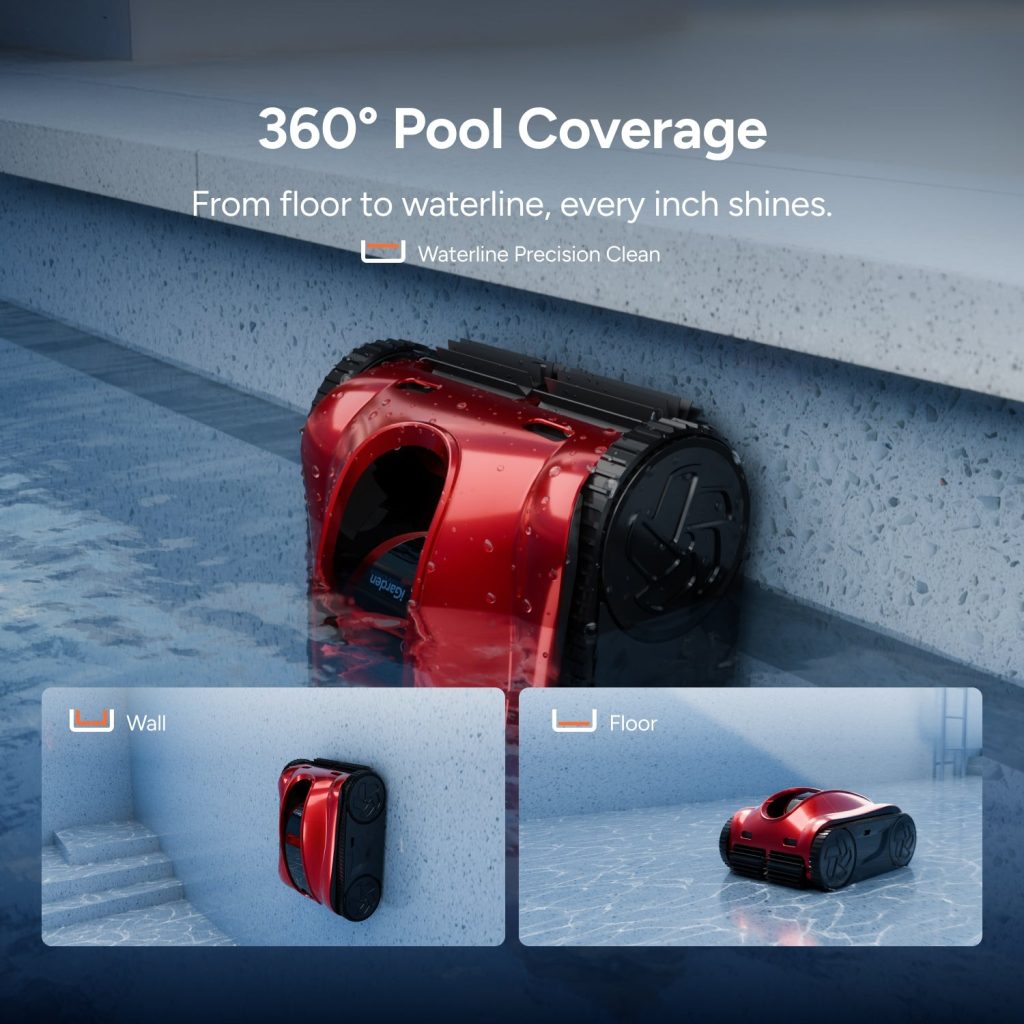
The most powerful suction in the world means nothing if the cleaner never reaches your pool’s trouble spots. Navigation technology ranges from simple random-bounce patterns to sophisticated gyroscopic or sensor-based mapping systems. Random patterns eventually cover most of the floor, but they waste time retracing paths and often miss corners, steps, and curved walls entirely. Gyroscopic navigation tracks the cleaner’s position and calculates efficient routes, ensuring systematic coverage in fewer passes. Wall-climbing capability is equally critical—the waterline is where oils, sunscreen residue, and organic buildup concentrate, creating both aesthetic problems and hygiene concerns. A cleaner that handles floors, walls, and the waterline in a single cycle eliminates the need for separate manual scrubbing sessions, saving you considerable weekly effort.
Ease of Use and Maintenance: The Beginner’s Best Friend
Here’s a pattern pool professionals see constantly: a new owner buys a capable cleaner, finds the maintenance process annoying or confusing, and gradually stops using it. The pool turns green, and they blame the equipment. Design features that reduce friction make all the difference. An easy-lift handle with an ergonomic grip lets you pull the unit from the water without straining your back—these cleaners are heavier than they look when waterlogged. Tangle-resistant swivel cords prevent the maddening coiling that traps cleaners mid-cycle and requires you to manually unwind cable. Quick-release filter compartments that pop open without tools mean you’ll actually rinse them after each use instead of postponing it. The principle is straightforward: every extra step or annoyance in the maintenance process is a reason you’ll eventually skip a cleaning session. Prioritize simplicity, and you’ll maintain consistency.

2. Choosing the Right Type: Suction, Pressure, or Robot? Finding the Best Robotic Pool Cleaner (or Other Type) for You
Understanding the three fundamental categories of vacuum pool cleaners is essential before you can make an informed purchase. Each type operates on a fundamentally different principle, carries distinct advantages, and suits different pool scenarios. Your choice here shapes everything from installation complexity to daily convenience.
Suction-Side Cleaners: The Budget-Friendly Starter
Suction-side cleaners connect directly to your pool’s existing skimmer or a dedicated suction line, using your filtration pump’s power to move around and vacuum debris. Their simplicity is their greatest strength—there’s no separate power source, no onboard computer, and setup typically takes under ten minutes. For beginners with small-to-medium pools featuring simple rectangular shapes and flat floors, they represent the lowest barrier to entry. However, they come with meaningful trade-offs. Because they rely on your pool pump, they increase energy consumption during operation and add wear to your filtration system. Their movement patterns are largely random, driven by water flow and hose dynamics, which means they struggle with walls, steps, and tight corners. They’re also prone to getting stuck on drain covers or tangled around ladders. If your pool is straightforward and your budget is tight, a suction-side cleaner handles basic floor debris adequately, but expect to supplement with occasional manual brushing.
Pressure-Side Cleaners: The Power Boost
Pressure-side cleaners use water pressure—either from your return line or a dedicated booster pump—to propel themselves and sweep debris into an attached collection bag. Their independent bag means large leaves, twigs, and acorns never clog your skimmer basket or main filter, which is a genuine advantage for pools surrounded by vegetation. They tend to handle larger debris better than suction-side models and move with more authority across the pool floor. The downsides are notable for beginners, though. Many models require a booster pump installation, which adds plumbing complexity and upfront cost. Even models running off the return line still depend on your main pump running simultaneously. Navigation remains relatively basic on most pressure-side units, and fine particle filtration through their mesh bags doesn’t match what cartridge-based systems achieve. They occupy a middle ground—more capable than suction cleaners for heavy debris loads, but demanding more infrastructure.
Robotic Pool Cleaners: The Ultimate in Convenience and Efficiency
Robotic cleaners operate as completely self-contained units with their own motors, filtration systems, and onboard intelligence. You drop them in, press a button, and they work independently of your pool’s pump and plumbing. For beginners, this independence is transformative—there’s nothing to hook up, no pressure adjustments to calibrate, and no additional strain on existing equipment. Their energy consumption is remarkably low, typically comparable to running a standard light bulb, because they use efficient DC motors rather than relying on your power-hungry pool pump. The navigation systems in modern robotic cleaners—gyroscopic mapping, sensor arrays, and programmed cleaning patterns—deliver the systematic coverage discussed earlier, handling floors, walls, and waterlines in calculated passes. Fine-filter cartridges capture particles that would pass through pressure-side bags entirely. The trade-off is a higher initial purchase cost, but when you factor in reduced pump runtime, lower chemical usage from better filtration, and eliminated booster pump electricity, the total cost of ownership over three to five years often favors robotics. For beginners who value automation and want genuinely clean water with minimal personal involvement, robotic cleaners consistently represent the most satisfying long-term choice. Smart home brands like iGarden have been expanding into this space, integrating pool maintenance into broader home automation ecosystems that let owners monitor and schedule cleaning cycles alongside other household systems.
3. Matching Your Specifics: Key Pool Size Considerations and Cleaning Habits
Generic recommendations only get you so far. The vacuum pool cleaner that earns five-star reviews from hundreds of owners might perform poorly in your specific pool because no two installations are identical. Matching a cleaner to your pool’s physical characteristics and your personal maintenance style is where smart buying decisions happen.
Analyzing Your Pool: Shape, Surface, and Debris Load
Your pool’s surface material dictates which brushes and traction systems will work safely and effectively. Vinyl liners scratch easily, so you need cleaners with soft foam or PVA rollers rather than aggressive bristle brushes designed for plaster or concrete. Fiberglass shares this sensitivity, while gunite and pebble-finish concrete pools benefit from stiffer brushes that can dig into textured surfaces where algae hides. Pool shape matters equally—a standard rectangular pool with a flat bottom presents minimal navigation challenges, meaning even basic random-pattern cleaners can eventually cover the entire surface. Freeform pools with curves, built-in benches, shallow sun shelves, or irregular step configurations demand smarter navigation systems that can detect obstacles and adjust course without getting trapped in dead zones. Finally, assess your debris reality honestly. A pool surrounded by mature trees dropping leaves, seed pods, and small branches needs a cleaner with a large-capacity filter basket and strong suction that won’t clog after ten minutes. A pool in an open yard with minimal landscaping primarily collects fine dust, pollen, and sand—here, filtration quality matters more than basket volume. Understanding these three variables narrows your options dramatically before you ever compare prices.
Aligning With Your Cleaning Habits and Lifestyle
Be honest about how involved you want to be in the cleaning process. If you travel frequently, work long hours, or simply want pool ownership to feel effortless, a programmable robotic cleaner that runs on a weekly schedule without your intervention is the right fit. You set it once, and it maintains your pool whether you remember or not. If you prefer hands-on control and enjoy tending to your backyard space, a simpler suction-side model that you deploy manually might feel more appropriate—and it costs less upfront. Consider cycle time relative to your routine: some robotic cleaners complete a full cycle in ninety minutes, while others take three hours or more for larger pools. If you want the pool ready for an after-work swim, a faster cycle matters. Energy consumption compounds over months—a robotic cleaner drawing 150 watts for two hours costs pennies per session, while running your main pump an extra four hours for a suction-side cleaner adds measurably to your electricity bill. Cordless battery-powered models eliminate cable management entirely and simplify storage, though their runtime limits them to smaller pools or shorter sessions. Match the cleaner’s operational demands to the time and attention you’re realistically willing to give, not what you aspire to on your most motivated day.
4. The Beginner’s Buying Guide: Prioritizing Long-Term Value Over Initial Price
With a clear understanding of features, types, and pool-specific requirements, you’re ready to translate knowledge into action. The biggest mistake beginners make is treating a pool cleaner purchase like a one-time transaction rather than a multi-year investment. A disciplined decision framework prevents buyer’s remorse and ensures your money works harder over the cleaner’s entire lifespan.
Solution Steps: A Practical Checklist for First-Time Buyers
Start by measuring your pool’s dimensions and identifying its surface material—this immediately eliminates models rated for smaller areas or incompatible brush types. Next, walk your yard and honestly catalog your primary debris: mature trees overhead mean you need large-capacity filtration and strong pickup for leaves, while an open exposure shifts priority toward fine-particle capture. Third, decide your automation threshold. If you want hands-off weekly maintenance, budget for a programmable robotic unit; if you’re comfortable deploying a cleaner manually each time, a suction-side model at a lower price point serves adequately. Finally, with two or three finalists identified, compare their energy efficiency ratings and warranty terms side by side. A two-year comprehensive warranty signals manufacturer confidence in durability, while a one-year limited warranty on a cheaper model often foreshadows early replacement costs. This four-step sequence—size and surface, debris type, automation level, then efficiency and warranty—prevents emotional purchases and keeps your decision grounded in practical reality.
Cost Analysis: Understanding Total Ownership
The sticker price tells only a fraction of the financial story. A suction-side cleaner purchased for a few hundred dollars still requires your pool pump to run additional hours weekly, adding meaningful electricity costs over three to five years. Replacement hoses, diaphragms, and wear parts accumulate quietly. A robotic cleaner’s higher upfront cost spreads differently: its independent low-wattage motor costs very little to operate per session, and quality models run three to five years before needing replacement brushes or tracks. Calculate your expected weekly runtime, multiply by your local electricity rate, and project across three years—many owners discover the robotic option costs less overall despite the initial investment. Warranty coverage deserves particular attention here. A model offering two or three years of protection against motor failure or electronic defects effectively insures your investment during its most critical early period. When you frame the purchase as total cost of ownership rather than checkout price, the value hierarchy often shifts dramatically, and the choice that initially seemed expensive reveals itself as the most economical path forward.
Making Your First Pool Cleaner Purchase With Confidence
Choosing your first vacuum pool cleaner doesn’t require mastering every technical specification on the market—it requires clarity about what actually matters. The essential foundation rests on three pillars: genuine cleaning performance driven by effective suction and fine filtration, intelligent navigation that reaches every surface without constant intervention, and user-friendly design that keeps you consistently maintaining your pool rather than avoiding it. Understanding whether a suction-side, pressure-side, or robotic cleaner fits your situation eliminates entire categories of wrong choices before you spend a dollar.
The right vacuum pool cleaner for a beginner isn’t defined by having the most advanced technology or the lowest price tag—it’s defined by reliable function matched to your specific pool and honest lifestyle habits. A cleaner that aligns with your pool’s surface material, shape, debris challenges, and your personal tolerance for hands-on involvement will serve you faithfully for years rather than gathering cobwebs after the first frustrating month.
Use the framework outlined here as your decision filter. Measure your pool, assess your debris, choose your automation level, and compare total ownership costs rather than sticker prices. With these steps completed, you’ll purchase with confidence and keep your pool exactly what it should be—a place of relaxation, not a recurring source of stress.