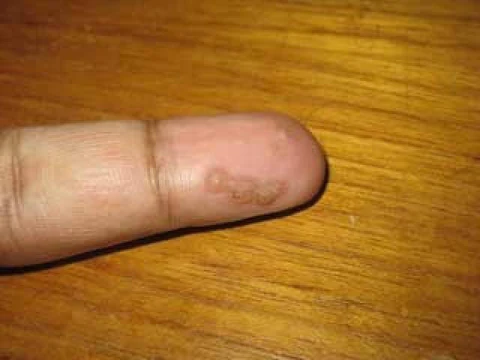
Monkeypox Pictures: What Does Mpox Look Like?

When monkeypox, now known as Mpox, emerged in the United States, it sparked concerns among individuals noticing any skin abnormalities. Health agencies such as the CDC have taken steps to alleviate uncertainty about the illness by disseminating pictures of monkeypox lesions. These images aim to educate and inform people about the appearance of lesions at different stages of the disease.
Monkeypox Pictures: 5 Stages
The Mpox virus belongs to the orthopoxvirus family. While it shares a connection with smallpox caused by the variola virus, Mpox is notably less severe and seldom leads to fatalities. Notably, neither Mpox nor smallpox is associated with chickenpox, which is triggered by the varicella-zoster virus.
Poxvirus-induced diseases typically result in skin lesions, nodules, or rashes.
In cases of Mpox, these lesions undergo changes or transformations throughout the course of an individual’s infection. The development of sores occurs in five distinct stages.
| Stages and Mpox (Monkeypox) Pictures | |
|---|---|
| Stage | Type of Lesion |
| 1 | Macules |
| 2 | Papules |
| 3 | Vesicles |
| 4 | Pustules |
| 5 | Scabs |
Stage 1: Macules
The initial phase of an Mpox lesion often begins with discolored, flat areas on the skin known as macules. Preceding this stage, there might be instances where an enanthem, a rash appearing on the mouth’s mucous membrane, occurs. Macules typically persist for around two days.
Stage 2: Papules
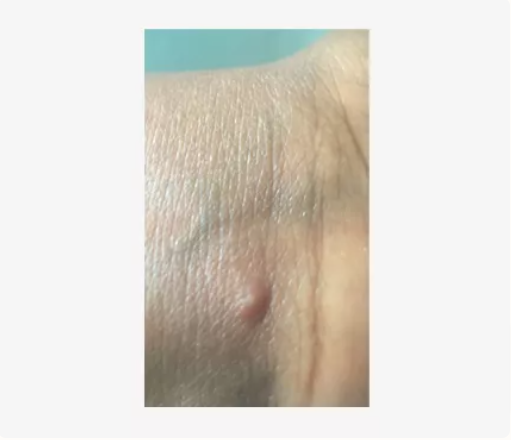
Following the macular stage, the skin areas will elevate and transform into papules. This phase can also endure for up to two days.
Stage 3: Vesicles
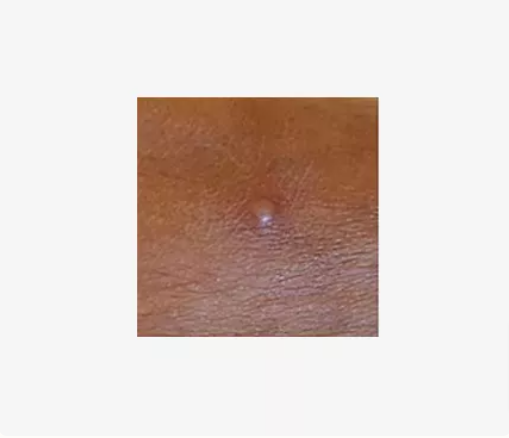
After the transformation into papules, the lesions will fill with a clear fluid, marking the onset of the vesicular stage in Mpox. This phase presents lesions that resemble blisters. The lesions can remain in the vesicular stage for up to two days.
Stage 4: Pustules
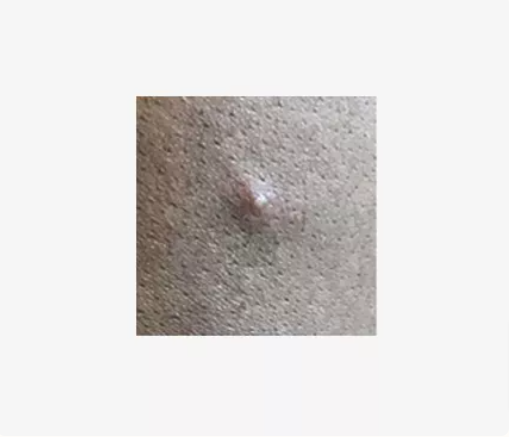
When the clear fluid within the vesicles becomes cloudy, the lesions transition into the pustular stage. These pustules usually exhibit a round shape and feel firm upon touch. Eventually, the pustules undergo umbilication, causing their domed shape to indent in the center. This stage can persist for five to seven days before the lesions start to form crusts.
Stage 5: Scabs
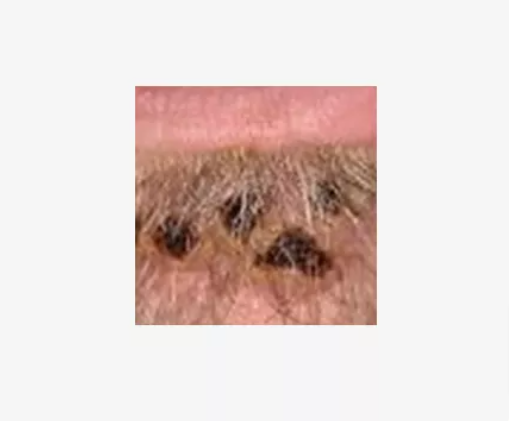
Ultimately, the lesions will form scabs, which may persist for approximately a week to up to 14 days before completely healing. In some cases, there might be residual pitting or skin discoloration.
Once the scabs have completely detached, the individual is no longer considered contagious.
Where Do Mpox (Monkeypox) Lesions Appear?
The lesions typically emerge and progress through stages simultaneously. They can manifest on various parts of the body, including:
- Chest
- Face or mouth
- Feet
- Genital area (anus, labia, penis, testicles, and vagina)
- Hands
Mpox (Monkeypox) vs. Pimples or Other Bumps
The appearance of the sores during the infection might pose a challenge in accurately identifying Mpox. Other conditions or infections may present similar symptoms, including:
- Bacterial skin infections
- Chickenpox
- Measles
- Allergies caused by medication
- Pimples or blisters
- Sexually transmitted infections (STIs) like herpes or syphilis
- Scabies
- Smallpox
Seeking clinical evaluation and undergoing polymerase chain reaction (PCR) testing can assist healthcare providers in confirming whether you have Mpox or another condition.
Other Mpox (Monkeypox) Symptoms
While lesions might serve as a distinct indicator of Mpox, the infection accompanies various other symptoms, such as:
- Backache, headache, or muscle aches
- Chills
- Cough
- Fatigue
- Fever
- Runny nose
- Sore throat
- Swollen lymph nodes
These flu-like symptoms could manifest before or after the rash appears, or in some cases, you might not experience them at all.
When To Reach Out To a Healthcare Provider
It’s crucial to consult a healthcare provider if you suspect exposure to Mpox or encounter symptoms of the infection. Seeking medical advice is important for unexplained rashes as well. Moreover, if you’ve been diagnosed with Mpox and:
- Experience dehydration, diarrhea, nausea, or vomiting
- Have an infected rash
- Observe the rash spreading to areas like the anus, eyes, genitals, or mouth
- Notice no improvement in symptoms
Seeking immediate medical attention is advised in these situations.
A Quick Review
Mpox is an infection characterized by lesions that evolve from flat, discolored spots to scab-covered areas. These lesions can manifest on various body parts, including the chest, hands, and feet.
Identifying Mpox might pose a challenge due to similar-looking conditions, and flu-like symptoms may not always accompany the infection. Consulting a healthcare provider is crucial to accurately diagnose Mpox and receive appropriate treatment for any symptoms.