Male vs Female Weed Plant: Why Growers Must Know the Difference
When cultivating cannabis, understanding the male vs female weed plant difference is essential for successful growth. Each plant type serves a distinct purpose, but failing to recognize them early can affect yield and potency. Beginners often struggle to distinguish between the two, leading to unwanted seeds or reduced flower quality. In this guide, we’ll explain how to spot differences, why it matters, and what every grower must know to protect their harvest.
Understanding Cannabis Plant
Cannabis plants are dioecious, meaning they grow as either male or female. This makes it crucial for growers to identify plant gender at the right time. Male plants primarily contribute pollen, while female plants produce the resinous buds rich in cannabinoids. A male vs female cannabis plant comparison shows that while males are important for breeding, females are far more valuable for consumption and medicinal use. Failing to identify the plant type early could result in accidental pollination, reducing bud quality. For growers, recognizing plant gender is the first step in controlling quality and maximizing yield potential.
How to Identify Male vs. Female Weed Plants
Spotting the difference between male vs female weed plants becomes easier once you know what signs to look for. From the early stages of growth to full flowering, each plant shows unique physical traits that help growers identify its gender.
1. Early Growth Stage
At first, plants look similar, but males usually grow taller and sturdier, preparing to support pollen sacs.
2. Pre-Flowering Signs
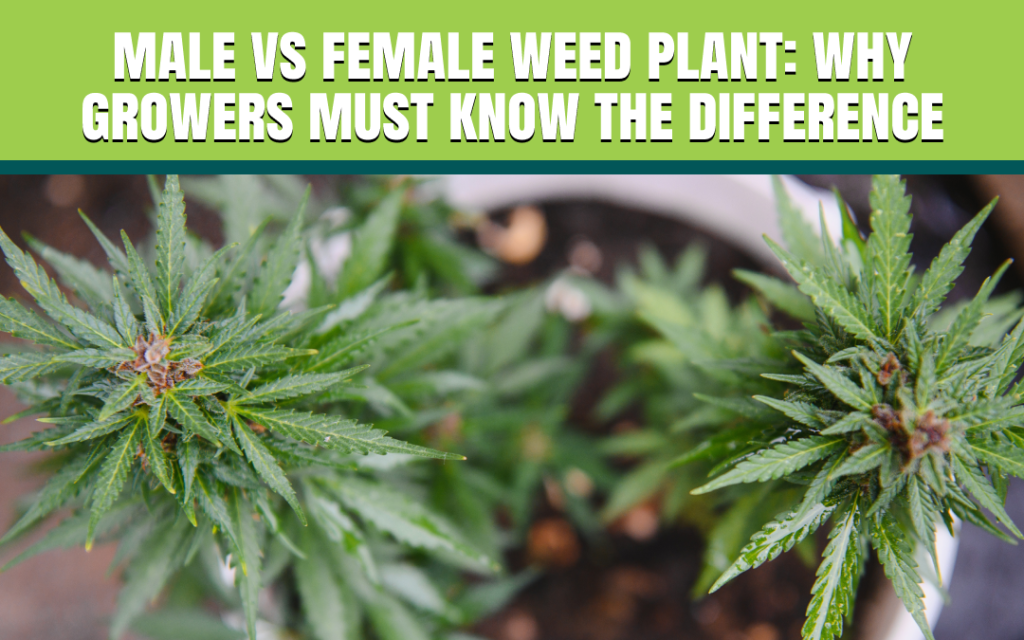
In the pre-flower stage, males develop small sacs near nodes, while females grow tiny pistils shaped like white hairs. This is the earliest reliable indicator.
3. Full Flowering Differences
During flowering, the difference is unmistakable. Males produce clusters of pollen sacs, while females develop dense buds coated in trichomes. Spotting these distinctions early allows growers to remove males before they pollinate females, ensuring the female plants focus their energy on producing potent flowers instead of seeds. Identifying correctly at each stage is the key to high-quality harvests.
The Role of Male Cannabis Plants
Male cannabis plants play a vital role in the natural growth cycle, mainly through pollination. Their pollen sacs fertilize females, leading to seed production. While they are not desirable for flower harvest, they are essential for breeding new strains and preserving genetics. For most growers, removing males is necessary to prevent seed-filled buds, but breeders keep them for creating hybrids and enhancing future cannabis cultivation practices.
The Role of Female Cannabis Plants
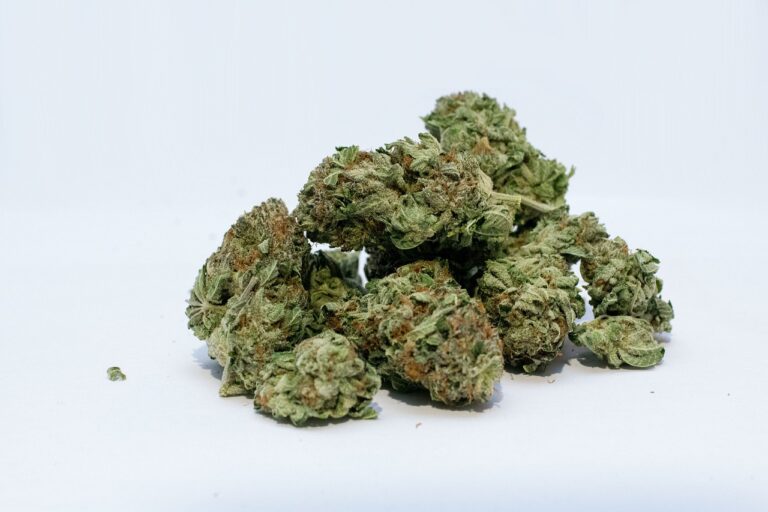
Female cannabis plants are the true stars of cultivation, as they produce the buds rich in THC, CBD, and other cannabinoids. These flowers are prized for both recreational and medicinal purposes. Unlike males, females channel their energy into resin production rather than pollen. This results in potent, aromatic buds that deliver the desired effects. Growers carefully nurture females to maximize yield, potency, and overall quality of the final harvest.
Why It’s Important for Growers to Know the Difference
Knowing how to separate male and female plants is crucial for anyone cultivating cannabis. Without proper identification, a grower risks losing both quality and yield. Here’s why:
1. Maximizing Yields
By removing males early, growers ensure females put all energy into dense, seedless buds.
2. Controlling Quality
Unpollinated females create resin-rich flowers with higher cannabinoid content, improving potency and flavor.
3. Preventing Unwanted Seeds
If males remain, females produce seeds instead of high-quality buds, reducing market value.
For those seeking professional guidance on cannabis education and cultivation, My Florida Green offers resources that help patients and growers make informed choices.
Conclusion
Distinguishing between male and female cannabis plants is the foundation of successful cultivation. Early identification ensures higher yields, stronger potency, and fewer risks of unwanted seeds. Whether growing for personal or medical use, understanding plant gender helps every grower maximize results and enjoy the full potential of their cannabis harvest.