Crypto-Backed Lending: How to Borrow USDC Without Selling ETH
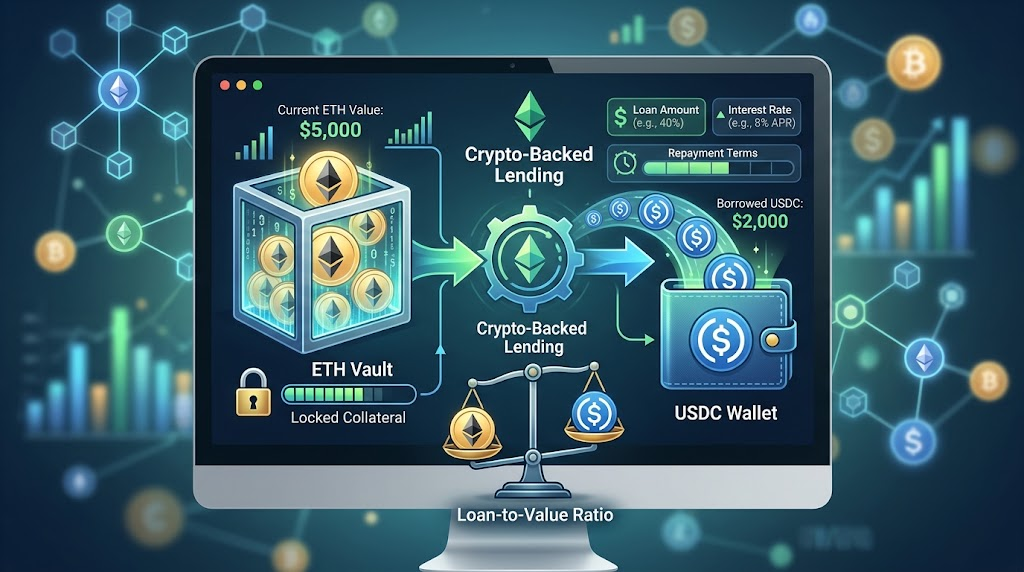
Cryptocurrency investors sometimes need cash while they still believe their digital assets may grow in value. Selling Ethereum (ETH) can provide quick access to money, but it may also mean missing future price increases. Crypto-backed lending offers another option by allowing users to borrow stablecoins against their existing cryptocurrency holdings.
This approach can be useful for covering short-term expenses, managing cash flow, or accessing funds without immediately selling an investment. However, borrowers need to understand collateral requirements, interest charges, repayment conditions, and the risks involved before using these services.
How Does Crypto-Backed Lending Work?
Crypto-backed lending allows someone to use cryptocurrency as collateral for a loan. Instead of selling ETH, the borrower deposits or locks it through a lending platform and receives another digital asset in return.
For example, an investor who owns Ethereum might need money to pay an unexpected bill. Rather than selling some ETH, the investor could borrow USDC, a stablecoin designed to maintain a value close to one US dollar.
The borrower must meet the platform’s collateral requirements and repay the loan according to its terms. Once the debt is fully repaid, the collateral can generally be released, subject to the platform’s rules and any applicable fees.
This method allows investors to access liquidity while maintaining exposure to potential changes in Ethereum’s market price.
Understanding USDC Credit Lines
A USDC credit line gives eligible users access to borrowed USDC against cryptocurrency collateral. Unlike selling an asset, borrowing creates a debt that must be repaid.
Some platforms offer credit lines through connected cryptocurrency wallets, allowing users to interact with blockchain-based lending services without relying entirely on traditional bank accounts.
For example, XQ Finance offers a crypto line of credit that allows eligible users to borrow USDC against ETH on the Base network without selling their Ethereum holdings. The platform also offers 0% interest when the loan is repaid within its 14-day grace period, subject to its applicable terms and conditions.
The grace period can be helpful for someone who expects to receive money soon and needs temporary liquidity. However, it should not be mistaken for a guarantee that borrowing is completely free, because blockchain transaction fees and other applicable charges may still apply.
How Much Collateral Is Required?
Collateral requirements determine how much a borrower can access relative to the value of their deposited cryptocurrency.
For instance, suppose an investor provides ETH worth $5,000 as collateral. If a platform permits borrowing up to 40% of the collateral value, the maximum initial loan would be $2,000.
Actual borrowing limits vary by platform, market conditions, and the type of collateral used. A lower borrowing amount generally provides a larger safety margin if ETH prices fall.
The collateral value can change quickly. If Ethereum’s price drops significantly, the loan may become undercollateralized, potentially triggering a margin call, a requirement to add collateral, or liquidation. Borrowers should therefore avoid borrowing the maximum amount simply because a platform allows it.
How Is Interest Calculated?
Interest is the cost of borrowing money. Depending on the platform, it may be calculated using an annual percentage rate, a variable rate, or another clearly defined pricing method.
For example, a $1,000 loan at a hypothetical annual interest rate of 12% would generate approximately $10 in interest over 30 days, assuming simple interest and a 365-day year.
Some services also provide promotional or grace periods with reduced or zero interest under specific conditions. Borrowers should confirm when interest begins, whether it accrues automatically after the grace period, and whether any additional charges apply.
Reading the pricing information carefully helps prevent unexpected costs.
Repayment Terms and Blockchain Fees
Repayment rules differ between lending platforms. Some require repayment by a particular date, while others allow borrowers to repay whenever they choose, subject to the product’s conditions.
Before taking a loan, users should understand whether partial repayments are allowed, what happens after a missed deadline, and how collateral is released after repayment.
Blockchain fees are another important consideration. Transactions on Base, an Ethereum layer-2 network, generally require network fees paid in ETH. Depending on the transaction and network conditions, users may need to pay fees when opening a credit line, moving funds, or repaying a loan.
These costs are separate from interest and can affect the overall expense of borrowing.
Key Risks Every Borrower Should Consider
Crypto-backed lending is not risk-free, even when a stablecoin is used.
- Price volatility: A sharp ETH price decline can increase the risk of liquidation.
- Liquidation costs: The platform may sell collateral to cover outstanding debt, potentially at an unfavorable price.
- Smart contract risks: Blockchain applications may contain vulnerabilities that lead to financial losses.
- Stablecoin risks: USDC is designed to track the US dollar, but its value and redemption arrangements are not entirely free from risk.
- Repayment pressure: Borrowers may need to find funds quickly if their loan approaches a deadline or collateral requirements change.
- Platform and network risks: Technical problems, changing fees, or service restrictions may affect access to funds.
Borrowers should also confirm whether a platform has custody of their assets, how its smart contracts operate, and what protections are available if something goes wrong.
Is Borrowing Against ETH a Sensible Choice?
Borrowing stablecoins against Ethereum can offer flexibility to investors who want access to funds without immediately selling their holdings. It may be particularly useful for short-term needs when the borrower has a realistic repayment plan.
However, a credit line should not be treated as free money or a way to eliminate investment risk. Before proceeding, users should compare borrowing limits, interest policies, grace periods, transaction costs, and liquidation rules.
The most sensible approach is to borrow conservatively, keep enough funds available for repayment, and understand every condition before connecting a wallet or approving a transaction. With careful planning, crypto-backed lending can be a useful financial tool, but its benefits depend on responsible borrowing and a clear understanding of the risks.