6 things to think about when you’re creating your own business logo
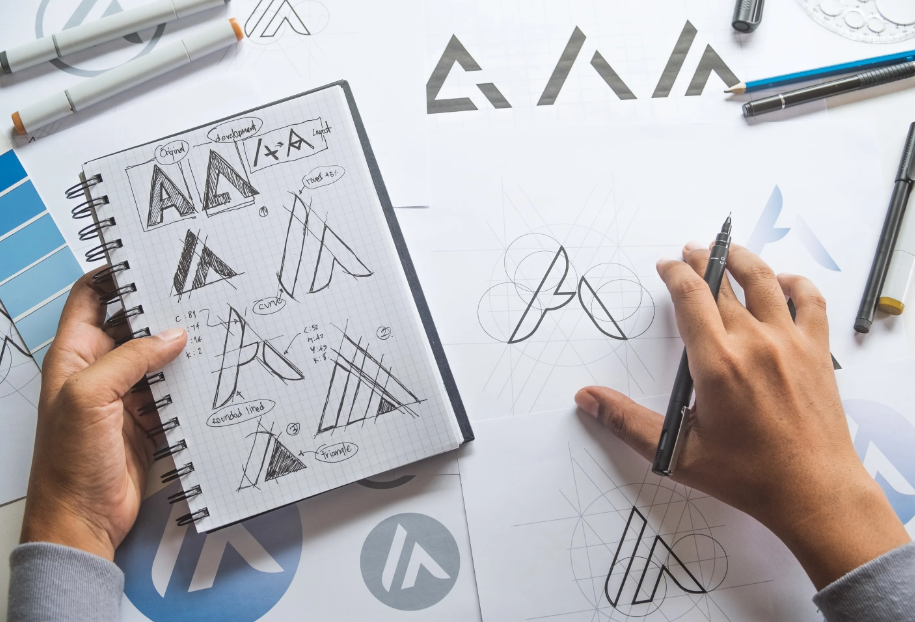
So, you want to start a business? Congratulations are in order—because even taking that first step on your own is a huge accomplishment. If we could give you one word of advice from the get-go, as you take the steps to make your business idea into a reality: plan your branding language early on.
From designing your own business logo to building a website, the more thought you put into creating these assets, the more in-line they’ll be with your brand’s goals, mission and values. With a cohesive visual language to market your business, your target customers and audiences are certainly more likely to remember your brand’s name.
In this article, we’re going to focus specifically on your business logo. After all, it will become one of the most important symbols of your brand. We’ll dive into 6 important things to think about when it comes to strategic logo design—from fonts and colors to size, trends and more.
Why is a business logo important?
The best logos are the ones customers recognize and intuitively associate with a brand. A look at some of the most famous logos of all time will show us how deeply a great business logo can penetrate into the minds of consumers. It’s one of the foundations of good marketing, becoming a consistent symbol of your business’s brand identity.
Once your logo makes a memorable impression, it’s easier for audiences to think about using your brand’s products or services. A great small business logo will help your new brand:
- Stand out from the competition
- Improve customer loyalty
- Build trust and recognition with your audience
Choosing the right logo maker
When creating your own business logo, you may choose to forgo using a professional graphic designer. Especially when starting off on your own, a pricey logo designer may just not be in your budget. (But if it is, that’s great!).
Another, cost-effective, way to get a unique logo for your small business is to create one with a logo maker. From free logo makers to paid versions, logo makers these days are an effective way to bring your logo vision to life—helping many business owners save both money and time.
A logo maker will generate multiple designs to choose from, along with multiple format options. These designs can sometimes result in a logo that will stick with your business for the long-run, but can also serve as inspirational mockups or kick-start the vision for your logo if you work with a professional designer.

What makes a quality business logo?
Tried and tested, we know a good logo when we see it. Whether you create a logo using a professional designer or use a logo maker on your own, there are several qualities you’ll want to consider first. Think about some of the most famous logos in the world—it’s usually comes down to these shared three qualities that make them stand out:
- Recognizable
- Original
- Timeless
Recognizable
Some make the mistake of creating business logos that are too loud and obnoxious in order to stand out. But it’s more important to make sure your logo is a genuine expression of your brand, a part of the “personality” that audiences will start to recognize.
Facebook’s first successful logo was clean and simple. As the company grew into the world’s biggest social media platform, it stuck with that same business logo design until a slight rebrand ten years later. Today’s most successful branding examples focus on having a cohesive and authentic language that draws customers into their community.
Originality
The biggest faux-pas you can make is creating a business logo that’s too similar to other brands’. Not only can eerie similarities confuse your audience, it would mean having legal risk involved too.
Take Pandora’s 2016 logo redesign: When the streaming service introduced its new logo, whose sans serif “P” icon and blue shade led millions of customers to complain about its deceiving similarity to PayPal’s own thoughtful logo design. It didn’t take much more for the money transfer site to bring Pandora to court, suing them in May 2017 for trademark infringement and ultimately using an image that “not only resembles, but openly mimics the PayPal logo.”
Timelessness
The goal is for your business to thrive for years to come, so put in the investment to ensure your logo will grow with it. That means thinking about elements that will age well, and considering how trends can fit into your design in a simple, yet timeless way. Logo rebranding is always an option down the line, but your first logo will need to make a lasting impression from the start for audiences to build a long-term association with your brand.
6 things to think about when creating your business logo
- Type of logo
- Font and colors
- Meaning
- Adaptability
- Design trends
- Size and scalability

1. Type of Logo
There are several types of logos your business can choose from. Depending on the details of your business—its name, location and many other qualities—you may find that one of these is better able to communicate your brand’s voice than another.
Some of the different types of logos include:
- Wordmarks (Liquid Death, Skims, Sephora)
- Lettermarks (MTV, Volkswagen, Playstation)
- Emblem (Starbucks, Harley Davidson, Apple)
- Mascot (Michelin, Footlocker )
- Abstract (Nike, Slack, AirBNB)
- Combination mark (The North Face)
We’ll talk more about scaling and adapting logos below, but one thing you can already consider is how some brands have different variations of their logos, sometimes combining these different types. For example, many of the lettermark or abstract logos listed above are often combined with wordmarks. This way businesses have refreshing options and a slight variety to mark unique assets.
In the case of MTV, the music channel’s artistic lettermark became a generational symbol on its own, although we often see it paired with the words “Music Television” below.
2. Font and colors
The font and color of your logo will become a big part of your brand. Both of these aesthetic qualities will act as visual tools for communicating your business’s tone. A well-selected and unique combination of fonts and colors are what allow customers to connect to and identify your logo, acting as an extension of the brand’s name and personality.
When you create a business logo, reflect on the words that describe your brand identity to help decide what typeface and brand colors you’ll use. Is your business serious? Quirky? Trendy? Punk? You should also think about the values your products or services give to customers, and how these can be visually represented. Skims is a great example: the logo’s neutral tones reflect an emphasis on natural beauty, while the font has an organic look that, just like the Skim products, accentuates its curves.
It’s also interesting to note how colors and fonts can take on new, playful meanings in different contexts. For example, the New York Times uses a gothic serif font which emphasizes the veritable quality of serious reporting (and is commonly used among established newspapers and journals). But a similar font type is also used by the beverage Liquid Death and food company Pink Taco to create a brave and bold branding style with attitude.
3. Meaning
By now, you probably get the sense that your business logo needs to be more than just visually appealing. The words, colors, fonts and symbols you use will carry a message to viewers, communicating certain aspects of your business’s values, personality and goals. Over time, your business logo will take on a meaning of its own.
A classic example is the Target logo, which uses a strong and clever symbol to serve its business logo design. The bright red bullseye is simple and memorable, and carries with it a strong message: come shop at our store and find exactly what you need, for exactly the price you were hoping for.
On this point, it’s important to also think about cultural nuances—especially if your business is targeting both local and global audiences.
4. Adaptability
Many successful brands think of ways to ensure they can “keep things interesting” with their logos using designs that allow for versatility. Again, think about the MTV logo example—the color palette of the iconic image was constantly being adapted to reflect the creativity and diversity of the music industry.
Especially today, adaptable, dynamic logos are trendy. They can be used to promote a cause, campaign or reflect an important holiday or notable date. Google’s sleek, modern logo design is neutral and consistent, but their Google Doodles are clever adaptations used to celebrate holidays, people, places and more. Many brands use this idea to capture the attention of audiences, for example, creating logo adaptations to commemorate Pride Month.
But sometimes adaptations have practical purposes: some brands like AirBnb will opt for a smaller adaptation of their primary logo, using their recognizable logo’s symbol (sans wordmark) on smaller assets like the phone app’s icon. At other times, an animated logo is another common adaptation that can be used to draw more attention on digital platforms.
5. Design trends
Gen-Z audience especially stands out as one of the most targeted groups for marketers, and for this reason, it can’t hurt to discover what’s trending when you brainstorm ideas for your business logo. Especially if your business serves this snazzy, tech-savvy generation, it’s important to know what kinds of visual experiences engage them.
Starface World is a skincare brand for teens which uses design trends in a charmingly clever way to speak the language of Gen-Z. The result is a visual identity that attracts younger generations, and more importantly, gives them confidence. Y2K inspired imagery, a retro font and electric color palettes have helped Starface’s logo and products become recognized as a favorite among Gen-Z.
6. Size and Scalability
Our last tip is a practical one, and you’ll thank us for it later. Once you’ve nailed down the creative and visual language of your business logo, you’ll need to prepare for its size and scalability for implementation. Your business logo will have many homes: your website, business cards, social media platforms and more.
Thinking about scalability from the beginning can help future-proof your brand’s marketing assets. It should be versatile enough to remain recognizable—whether it’s being scaled up or scaled down. This might mean simplifying complex details, or creating adaptations that can be integrated across a variety of formats and platforms.